


All voices matter when building for the future
- Marion Ximena
- 14 abr 2019
- 4 min de lectura
Actualizado: 23 abr 2019
Mexico’s society has evolved a lot, and blossomed internationally by being recognized for its enriched and vibrant communities and multicultural identity. But nonetheless, this has occurred inside an environment full of contradictions, where one can perceive both a sense of community and intrinsic solidarity, but also resentment, learned hopelessness and distrust, even between communities.
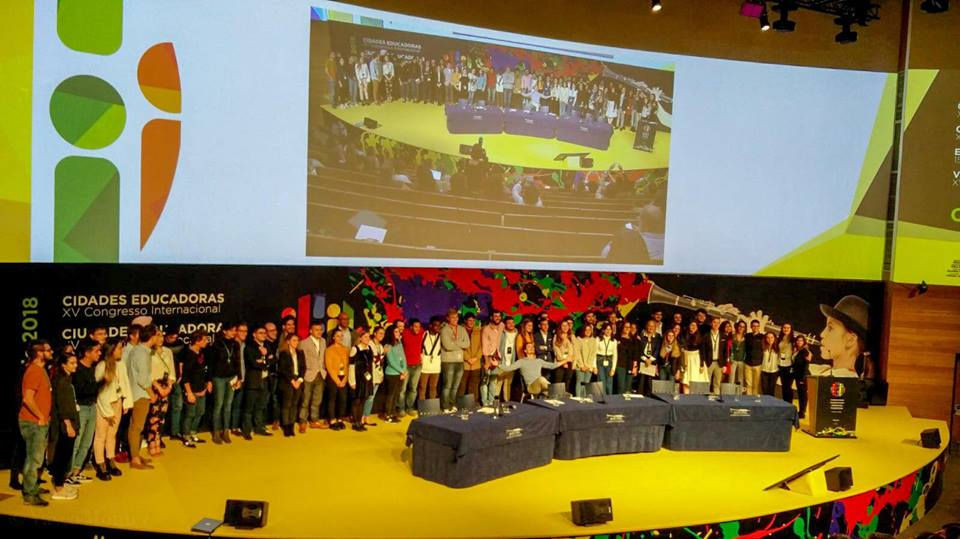
In my country, it is common to hear complaints about the government, authorities and people in general, constantly denoting how their inefficiency, corruption, and actions have limited the development and growth of the nation, and consequently prevented the people from having a better quality of life. Although this isn’t far from the truth, I believe that, as a society, we have failed to detect why is this happening, simply allowing ourselves to be trapped in the tale of “others are responsible” and often condemning without any insight. Mexico is the consequence of years of mismanagement, misinformation, and a great measurement of learned hopelessness and disbelief in one another, yet I believe that the key to progress lies within its people and what we need is to have a little more faith in our capacity to change, but to this day, very few decide to actively involve in the city’s development. So, how to ignite a whole community’s intuitive desire for evolution, knowledge and self-awareness?
Paraphrasing Pedro Kumamoto, a Mexican Politician that I admire for his vision of an actively democratic government, ‘when we make changes in a "micro" context, we can change the "macro" environment’, and I believe this to be true, especially if we aim to build better communities and cities for the future.
León is one of the most important cities in the country. It is well configured and globally connected, and yet, still incapable to reach an inclusive identity of itself. As an International Business’ student, I am witnessing its transformation as it is exposed to different cultures and nationalities, evolving to meet a globalized and more connected world than ever, and this inspires me and many others, however, many people are unable to perceive this change, and even less the good that it may bring. I was curious as to why the municipality’s efforts weren’t being acknowledged, so I decided to inquire deeper and got involved in social, academic and governmental projects that allowed me to understand the very basics of social interaction, and how they shape the collective consciousness of the society. About a year ago, I started an internship in the Directorate of Innovation of León, where I participated in international affairs, continuous education projects for society and public officials, and social laboratories (also known as citizens’ laboratories), where both citizens and government collaborate to achieve lean and efficient public politics and solutions to the needs of the community. That led me to understand the concepts of open government, the importance of transparency and information, but also of the community’s participation, I also created a personal project call CUE, which stands for University Council of Ethics in Spanish, and aims to spread the practice of applied ethics on a daily basis, especially on younger people. After these experiences I realize that, most of the time, people are not involved or even aware of the public politics and programs that shape the city. Older generations react in disbelief towards the evolution and decisions of the political environment, while the younger ones fail to utilize their own capabilities and power of influence, frequently unbeknownst to themselves. I concluded that this phenomenon and the lack of a proactive behavior were due to an inclusion-deficient and non-educated population.
A city must be perceived as an entity with independence and individuality, which evolves at its own pace and is the reflection of its society’s vision and desires, and as such, it should sustain the recognition all groups and their needs, and to acquire a collective vision, it must work on elevating the voices of the individuals and teach them to use it, so they can have a sense of identity and belonging; and I believe that the youths are elemental in this process, as they hold a strategic position to ignite a multilateral expansion of the knowledge, and therefore sustain an ongoing education system where transparency and collaboration are the main values.
I believe in the redefinition of the centralization of the government as a tool for every citizen, regardless of how are they participating (inside or outside of the public institutions), and not a mean of power. This will allow the decentralization of the control over decisions from only a few people and will permit the involvement of the population in every area of the society. We must forget the paradigm of government and society seen as opposites but rather as two sides of the same coin that cannot exist without the other, and youngsters are elemental to spark the change in the collective consciousness for open government strategies to work. Making and redefining what public politics are as what sometimes in innovation terms is called a Community of kindred spirits (co-creation) where the decisions and solutions are made by and for the people.
Achieving a functional open government should start with the fusion of youths and education, which in its own should be continuous, multilateral and dynamic, so the population can comprehend their part in the collective story. If we aspire to fuse the two into practical projects that listen to the society’s needs, we will have a more conscious and evolved society, were values, respect and inclusion shape the growth of the city, acknowledging that all voices matter when building for the future.

Comentarios